
Smart Contract and Web3 Development Services

The evolution of blockchain technology has ushered in a new era of digital transformation, in which automation, decentralization, and trustless systems are becoming the foundation of modern business operations. Among the most powerful innovations in this space are smart contracts and Web3 development services, which are redefining how businesses build and manage digital ecosystems.
Smart contracts are self-executing digital agreements that automatically carry out actions when predefined conditions are met. These contracts are stored on blockchain networks and operate without the need for intermediaries. Once deployed, smart contracts cannot be altered, ensuring transparency, security, and reliability in all transactions.
For modern businesses, smart contracts offer a powerful way to automate complex processes. They eliminate manual intervention, reduce operational costs, and improve efficiency. In traditional systems, agreements often require third-party validation, legal processing, and manual execution. Smart contracts remove these barriers by executing actions automatically based on coded logic.
Web3 development services extend the capabilities of smart contracts by enabling the creation of decentralized applications, token economies, and blockchain-based ecosystems. Web3 represents the next generation of the internet, where users have full control over their data, digital identity, and assets. Unlike traditional Web2 systems, Web3 eliminates centralized control and introduces peer-to-peer digital interactions.
One of the key benefits of smart contracts is automation. Businesses can use them to automate financial transactions, supply chain processes, insurance claims, and legal agreements. For example, in financial systems, funds can be automatically released once conditions are verified. In supply chains, payments can be triggered automatically upon delivery confirmation.
Security is another major advantage of smart contracts. Since they are built on blockchain networks, they inherit the security features of decentralization and cryptographic encryption. This makes them highly resistant to tampering, fraud, or unauthorized access. Once deployed, smart contracts execute exactly as programmed without external interference.
Web3 development services also include decentralized application development, token creation, NFT platforms, DAO systems, and DeFi solutions. These services allow businesses to build fully decentralized ecosystems where users actively participate in governance, transactions, and value creation.
Tokenization is a key concept in Web3 development. It allows real-world or digital assets to be represented as blockchain-based tokens. This opens up new business models such as fractional ownership, digital investments, and decentralized marketplaces. Token-based ecosystems are becoming increasingly popular across industries such as finance, gaming, and real estate.
NFTs, or non-fungible tokens, are another important component of Web3 development. They represent unique digital assets that can be used for ownership verification, digital collectibles, and access control systems. Businesses are using NFTs for brand engagement, loyalty programs, and digital asset monetization.
Decentralized Finance, or DeFi, is one of the fastest-growing applications of Web3 technology. DeFi platforms provide financial services such as lending, borrowing, trading, and staking without traditional banks or financial institutions. These platforms rely heavily on smart contracts to ensure transparency and automation.
Web3 development also enables decentralized governance systems known as DAOs (Decentralized Autonomous Organizations). DAOs allow users to participate in decision-making processes through token-based voting systems. This creates more democratic and transparent organizational structures.
Despite its advantages, Web3 development and smart contract implementation require technical expertise and careful planning. Challenges such as scalability, regulatory uncertainty, and security vulnerabilities must be addressed during development. Poorly written smart contracts can lead to serious financial risks, making security audits extremely important.
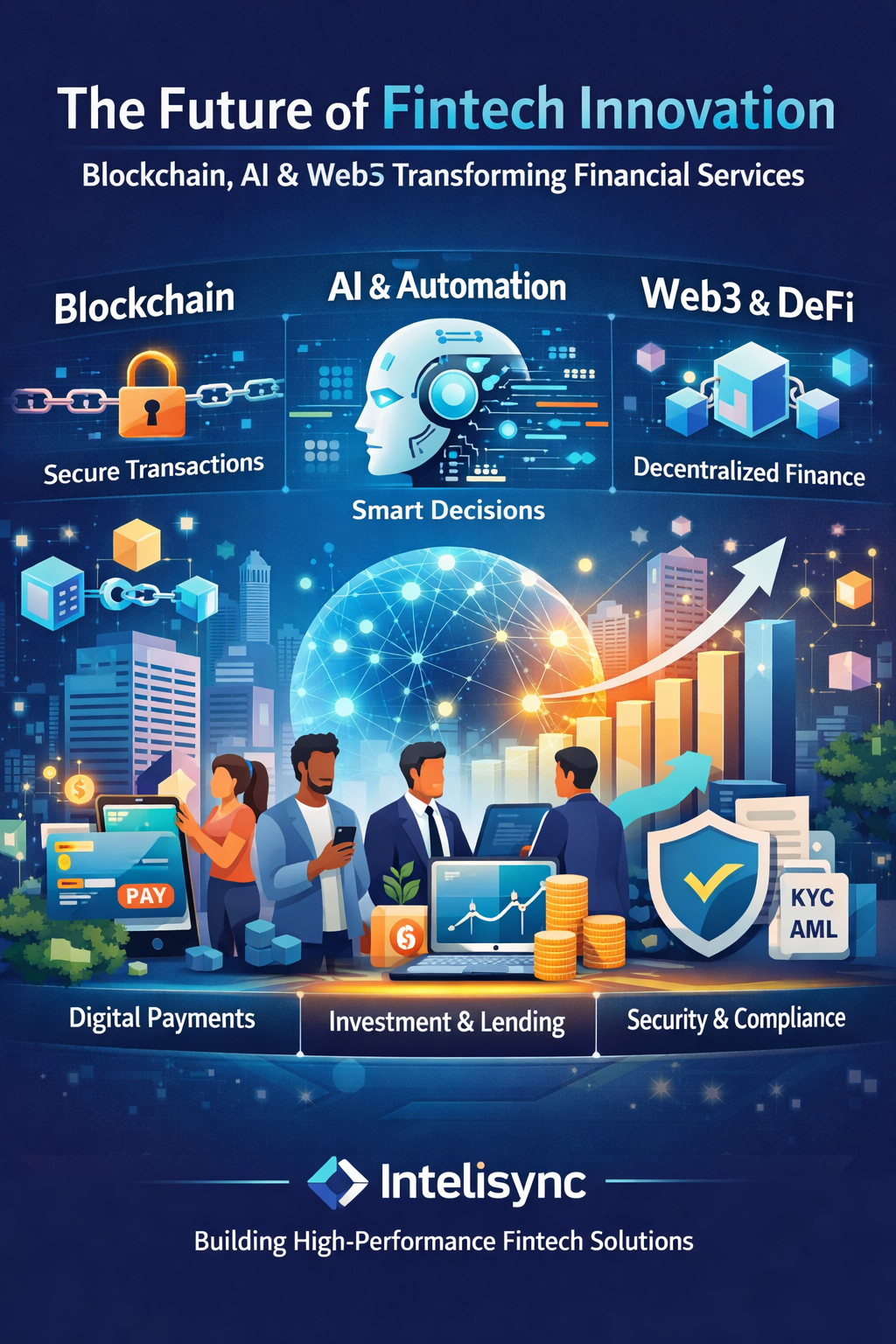
Industries such as fintech, healthcare, supply chain, gaming, and digital media are already adopting smart contract and Web3 solutions. In fintech, they are used for automated payments and decentralized exchanges. In healthcare, they secure patient data and streamline medical processes. In supply chains, they improve tracking and transparency. In gaming, they enable asset ownership and play-to-earn models.
The future of smart contracts and Web3 is highly promising. Emerging trends include AI-powered smart contracts, cross-chain interoperability, decentralized identity systems, and fully autonomous business ecosystems. The combination of AI and Web3 will further enhance automation and intelligence in digital systems.
As digital transformation accelerates globally, businesses that adopt smart contract and Web3 development services will gain a strong competitive advantage. These technologies enable faster operations, reduced costs, improved security, and enhanced user trust.
In conclusion, smart contracts and Web3 development services are redefining the future of digital business. They provide the foundation for decentralized, automated, and transparent ecosystems that are essential for next-generation innovation. Businesses that invest in these technologies today are building a future-ready digital infrastructure capable of adapting to evolving market demands.
Comments ()